4.04 After After
Erin Marie Lynch
+ Statement
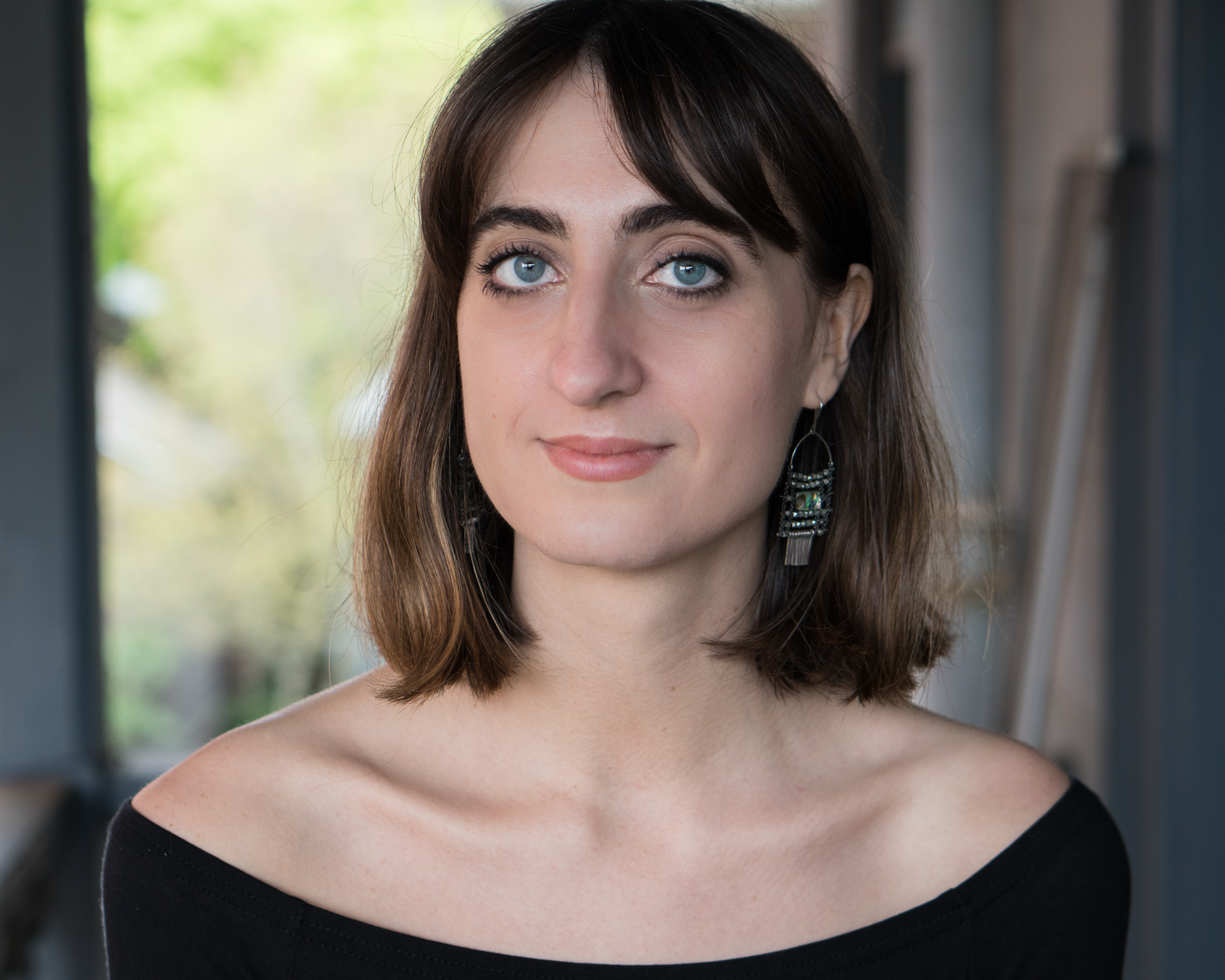
I deeply felt the series of photographs I was given to translate. I understood them intuitively, in my throat. The act of translation, for me, then became an emotional one: to take the feelings that lived inside the photos and refract them through my own emotional world. In “Broke Up,” a woman (the artist?) keeps a steady gaze into the camera, looking out upon herself—her own longing, her own grief, and her own presence. I tried to hold her gaze until it became my own.
—Erin Marie Lynch
+ Bio
Erin Marie Lynch is a poet and artist. Her writing has appeared in journals such as New England Review, Gulf Coast, Narrative, and DIAGRAM, while her performance and video work has been featured at a variety of exhibitions and festivals. She is a former Hugo House Fellow and has been the recipient of support from the University of Washington, University of North Texas, and the Bill & Ruth True Foundation. Born and raised in Oregon, she is a descendant of the Standing Rock Sioux Tribe. Currently, she is a PhD student in Creative Writing and Literature at the University of Southern California.
erinmarielynch.com
+ Collect Call
I have never placed a collect call and am unsure how to go about doing so. Google tells me that “People also ask”: Are collect calls still a thing?
Are they? On the intersection by my apartment building stands the shell of a payphone—just the outer part. The phone itself has been long since removed.
In my mind, the phrase—“collect call”—splinters into its two separate words, two separate concepts. Collections, as in unpaid debt, and Call, as in vocation, as in My Call. Both of these, if I ignore them long enough, can cease to feel real.
On the other hand, I remember suddenly, collect calls are still placed every single day in America, most notably by its prison inmates.
As of 2017, my mobile phone provider (Verizon Wireless) no longer supports collect calls.