4.02 Long Distance
Rachel Mannheimer
I liked the time alone. Then weekends up to Boston, his fireplace and rainbows cast through crystal doorknobs on the floor. Cycles of expansion and contraction, wet and dry, the slow distortion of my life. In certain light, his mouth looked like my mom’s.
Eventually, it wasn’t only structural, the load I couldn’t bear—counting hours led to keeping score. A fellow in philosophy, he relished argument about the meaning of the things I said. I was selfish, wretched in South Station. He was moved to better humor by my tears.
Our second summer, he was working on an article on quid pro quo exchange. I didn’t have a project—I read novels, felt ignored. Then we’d go for dinner.
In quid pro quo exchange, two promises are given as “consideration,” each performance will incur a debt the other satisfies. The end result is that nothing is owed—
Including gratitude. Which is why, among familiars, it’s rare. We’re always in each other’s debt—to be “all settled up” is futureless. At his request, I edited the article in its final form. He respected my intelligence and only felt that it was often misapplied.
We broke up on the phone. Later, we shared one abundant day, laughing at our former selves, fishing muddled fruit from drinks in flowering bar backyards.
When the article came out, I didn’t find my name in the acknowledgments.
+ Statement
Gazing through the window of Rainbow wifi nuts—flowering trees on a gray day—I was thinking first of connection over distance, of light after a storm. And this rainbow of humanoid bars, indicating signal strength. . . Are they holding each other up or crushing each other? Is each giving birth to a new self? (And where are their heads??)
The theme of “collect call” got me thinking also about debt, and about the rainbow as Biblical covenant, or contract. It suggested a narrative in seven bars.
—Rachel Mannheimer
+ Bio
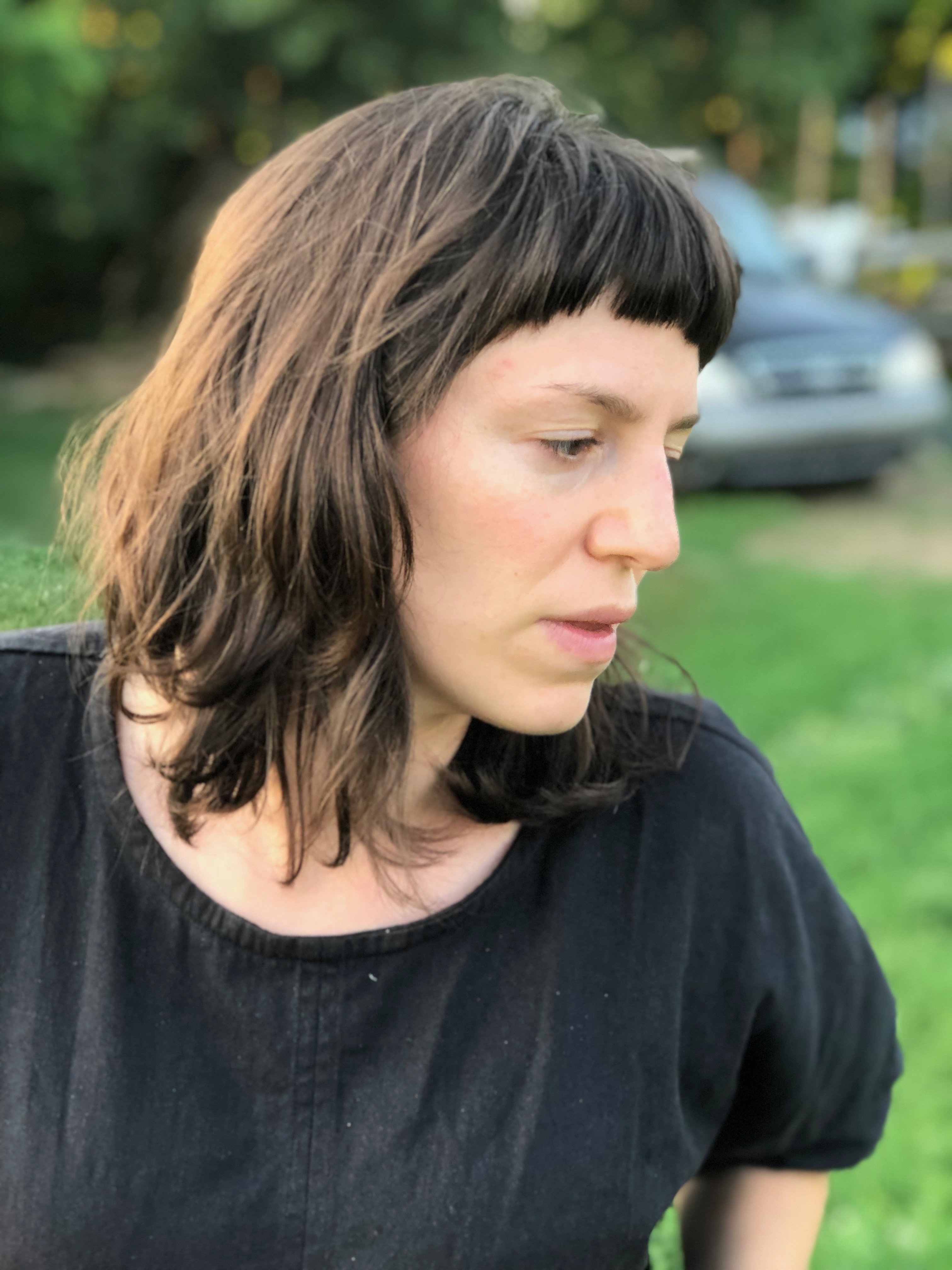
Rachel Mannheimer was born and raised in Anchorage, Alaska. She earned her MFA at NYU and was a Visiting Fellow at the Global Research Institute at NYU Berlin. Her poems have appeared in Tin House Online, Subtropics, Narrative, and elsewhere. She lives and works as an editor and book scout in New York’s Hudson Valley.
www.rachelmannheimer.com
Twitter: @mannheimerup
+ The "I" Transformed
I loved seeing how this process, unfolding over the summer, incorporated history as it happened, how the “collect call” came to reflect an urgent call to collectivity. I had been unsure about writing in my usual semi-autobiographical mode for this semi-collaborative project. But art is always semi-collaborative, a relationship between artist and reader/viewer/listener, a message received and interpreted. The “I” of a poem is always transformed in the transmission of it, and the Tele- process made that visible. The fact that, immediately, in Elisa Garcia de la Huerta’s gorgeous piece, that feeling of broke up was there expressed on another’s face—already the “I” wasn’t solely my own. (And I loved Erin Marie Lynch’s statement about, in turn, meeting and adopting Elisa’s gaze… So forward we go!)
—Rachel Mannheimer